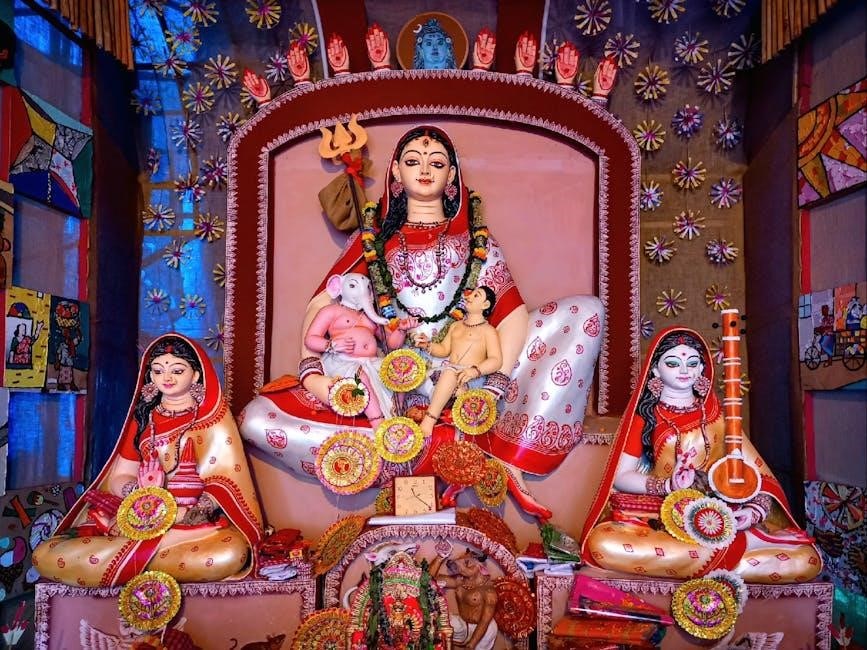
Hinduism boasts a remarkably diverse pantheon, encompassing deities like Shiva, Vishnu, Ganesha, and Parvati, alongside countless others.
Exploring this rich tapestry reveals a complex system of beliefs centered around divine beings, each with unique attributes and roles.
The vast collection of names, found in resources like Sahasranamavali and Ashtottara Shatanamavali, highlights the profound reverence for these deities.
The Vast Hindu Pantheon
Hinduism’s divine realm is extraordinarily expansive, featuring a multitude of gods and goddesses, far beyond a simple enumeration. This intricate pantheon isn’t a rigid hierarchy, but rather a complex web of interconnected beings, each representing different aspects of the ultimate reality, Brahman.
Deities like Shiva, Vishnu, Ganesha, Parvati, Lakshmi, and Saraswati are central figures, yet thousands more populate the Hindu cosmos. Resources detailing these deities, such as comprehensive lists and Namavalis (collections of names like Ashtottara Shatanamavali), demonstrate the depth of this spiritual tradition.
These lists, often found in PDF format for easy access, categorize deities by function, lineage, or associated mythology. Understanding this vastness requires acknowledging the symbolic nature of each deity, representing universal principles and energies rather than solely individual personalities.
Importance of Deities in Hinduism
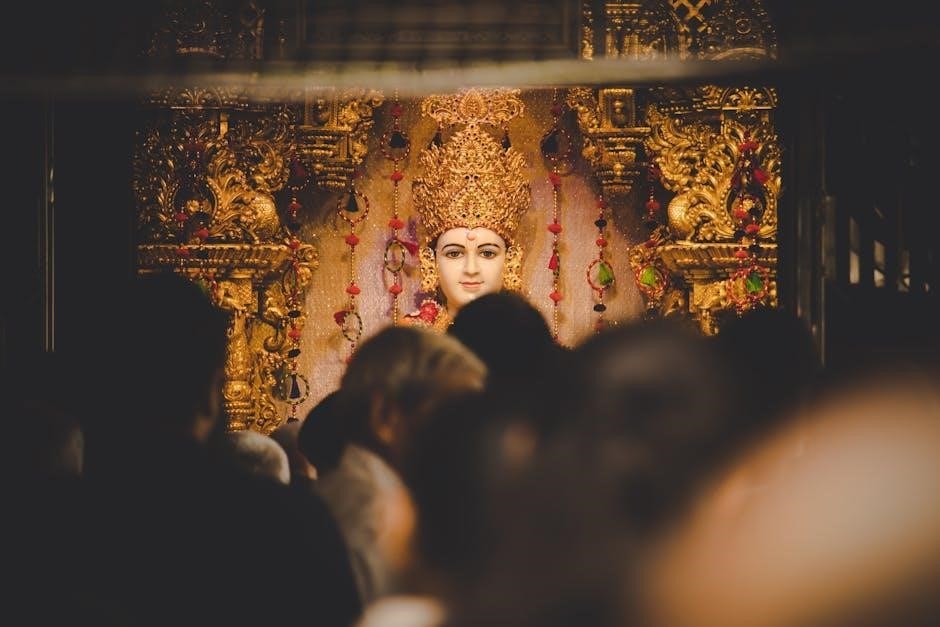
Hindu deities aren’t merely worshipped as distant, unreachable figures; they are integral to daily life, serving as focal points for devotion, guidance, and spiritual growth. They represent accessible manifestations of the divine, allowing devotees to connect with the abstract concept of Brahman through relatable forms and narratives.
The recitation of Namavalis – like the Sahasranamavali containing 1000 names – is considered highly auspicious, invoking blessings and fostering a deeper connection with the chosen deity. PDF resources compiling these names are widely available, aiding in devotional practices.
Deities offer solace, protection, and the fulfillment of desires, but more importantly, they inspire individuals on their journey towards self-realization and liberation (moksha). Their stories, found in sacred texts, provide moral lessons and philosophical insights.
The Trimurti: The Divine Trinity
Hinduism’s core features Brahma (the creator), Vishnu (the preserver), and Shiva (the destroyer), representing cosmic functions and divine balance.
Brahma: The Creator God
Brahma, within the Trimurti, embodies the creative principle of the universe, originating existence from a cosmic golden egg. Often depicted with four faces, symbolizing the four Vedas, and four arms holding sacred objects, he represents the entirety of knowledge and the directions.
Though revered as the initial creator, worship of Brahma declined over time, with Vishnu and Shiva gaining prominence. Despite this, his role remains fundamental to Hindu cosmology, establishing the foundation upon which all other deities and realms exist.
Temples dedicated solely to Brahma are rare, with Pushkar in Rajasthan being a notable exception. His consort is Saraswati, the goddess of knowledge, music, and the arts, further emphasizing his connection to creation and intellectual pursuits. He is a vital component of the divine trinity.
Vishnu: The Preserver God
Vishnu, a central figure in the Trimurti, is revered as the preserver and protector of the universe, maintaining cosmic order and balance. Often depicted with blue skin, symbolizing infinity, he rests upon the serpent Shesha, representing eternity, and holds a conch, discus, mace, and lotus – each embodying vital aspects of existence.
Vishnu is particularly known for his ten avatars, divine incarnations descending to Earth to restore dharma and vanquish evil, with Rama and Krishna being the most celebrated. His consort is Lakshmi, the goddess of wealth, prosperity, and auspiciousness, symbolizing abundance and divine grace.
Worship of Vishnu is widespread, with numerous temples dedicated to him across India and beyond. Devotees seek his blessings for protection, well-being, and spiritual liberation, recognizing him as the compassionate guardian of creation.
Shiva: The Destroyer God
Shiva, the third member of the Trimurti, embodies destruction and transformation, essential for renewal and the continuation of the cosmic cycle. Often depicted as an ascetic, adorned with a crescent moon and the sacred river Ganga flowing from his hair, he represents both power and serenity.
Shiva is frequently portrayed with a third eye, symbolizing wisdom and insight, and wields a trident, representing the control over the three aspects of existence. His consort is Parvati, representing divine energy and strength, and together they symbolize the perfect union of masculine and feminine principles.
Nataraja, the cosmic dancer, is a prominent form of Shiva, illustrating the dynamic energy of creation and destruction. Devotees seek Shiva’s blessings for courage, strength, and liberation from the cycle of rebirth.
Major Goddesses and Their Forms
Hindu goddesses, like Parvati, Lakshmi, Saraswati, Durga, and Kali, represent divine feminine energy, power, and nurturing aspects of the universe.
Parvati: The Divine Mother
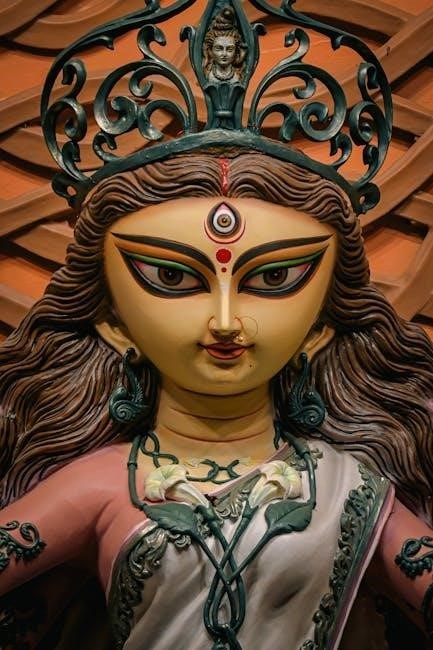
Parvati, revered as the divine mother and consort of Shiva, embodies love, devotion, and strength. She represents the perfect wife, mother, and the energy that drives creation, preservation, and destruction. Her name signifies “daughter of the mountain,” referencing her birth to Himavan, the king of the Himalayas.
Parvati manifests in various forms, including the gentle Uma and the fierce Durga and Kali, demonstrating her multifaceted nature. She is often depicted with two or four arms, holding symbolic objects like lotuses, conches, and weapons.
Devotees seek her blessings for marital happiness, progeny, and protection. Her worship is integral to Shiva’s adoration, and together they represent the harmonious balance of masculine and feminine energies. The Sahasranamavali includes numerous names dedicated to her divine attributes, showcasing her importance within the Hindu pantheon.
Lakshmi: Goddess of Wealth and Prosperity
Lakshmi, the radiant goddess of wealth, prosperity, love, and beauty, is a central figure in Hindu worship. Often depicted seated on a lotus flower, she bestows abundance – both material and spiritual – upon her devotees. Her four arms symbolize the four goals of human life: dharma (righteousness), artha (wealth), kama (desire), and moksha (liberation).
She is the consort of Vishnu, and her presence signifies auspiciousness and good fortune. Lakshmi’s blessings extend beyond mere riches; she embodies grace, generosity, and purity.
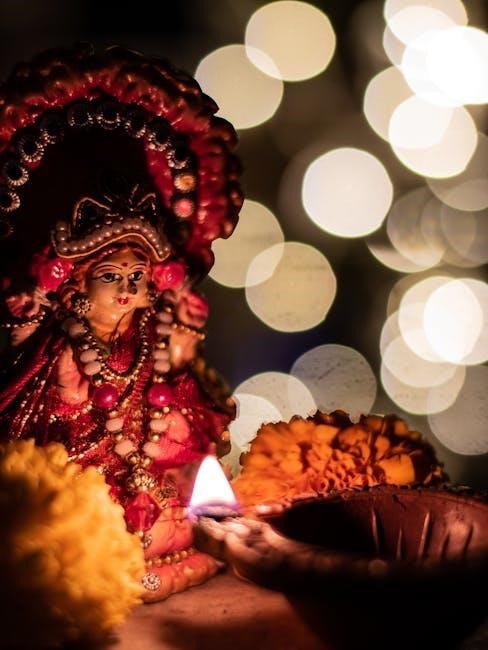
Devotees invoke her through prayers and rituals, particularly during Diwali, the festival of lights. The recitation of her names from the Sahasranamavali is believed to attract prosperity and remove obstacles. Lakshmi represents the power of abundance and the potential for fulfillment in all aspects of life.
Saraswati: Goddess of Knowledge and Arts
Saraswati, the luminous goddess of knowledge, music, arts, wisdom, and learning, is deeply revered in Hinduism. She is often portrayed as a beautiful woman dressed in white, seated on a white lotus, symbolizing purity and enlightenment. She holds a veena (a musical instrument), representing harmony, and a book, signifying knowledge.
As the embodiment of intellect, Saraswati inspires creativity and guides individuals on the path of wisdom. She is the consort of Brahma, the creator god, and plays a vital role in the creation of the universe through her power of speech and expression.
Devotees seek her blessings for academic success, artistic endeavors, and spiritual growth. Reciting her names from the Sahasranamavali is believed to enhance intellect and unlock creative potential. Saraswati represents the power of knowledge to illuminate and transform lives.
Durga: The Warrior Goddess
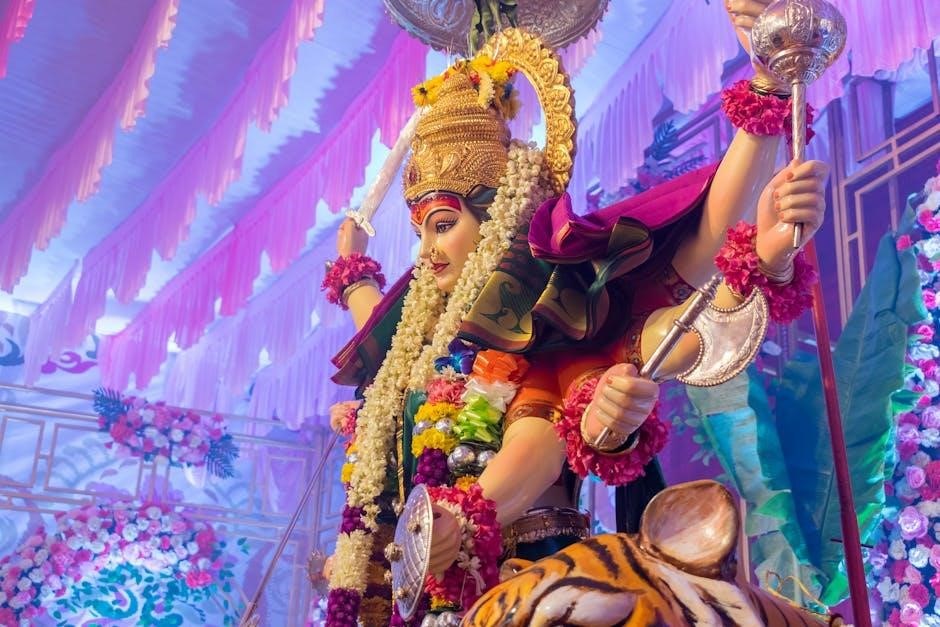
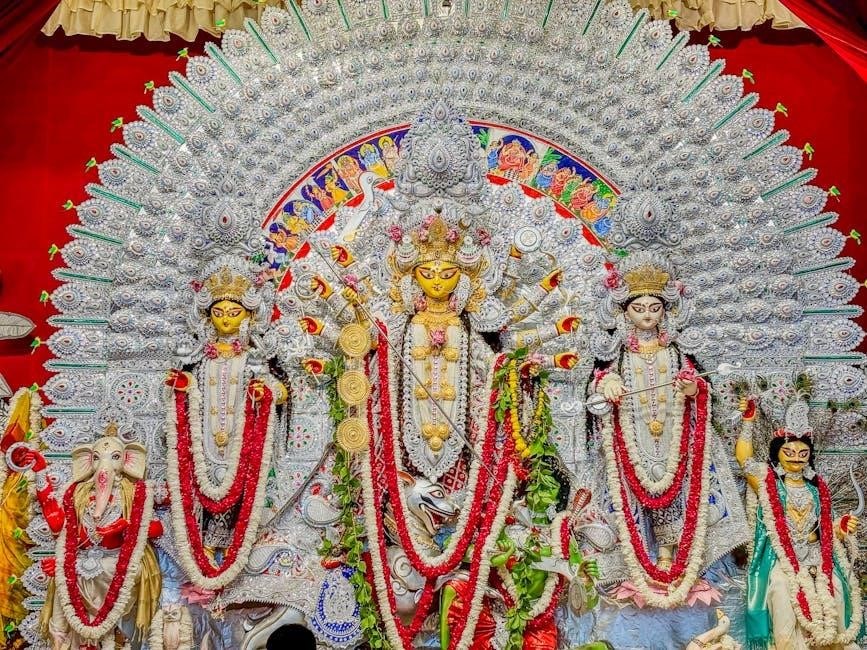
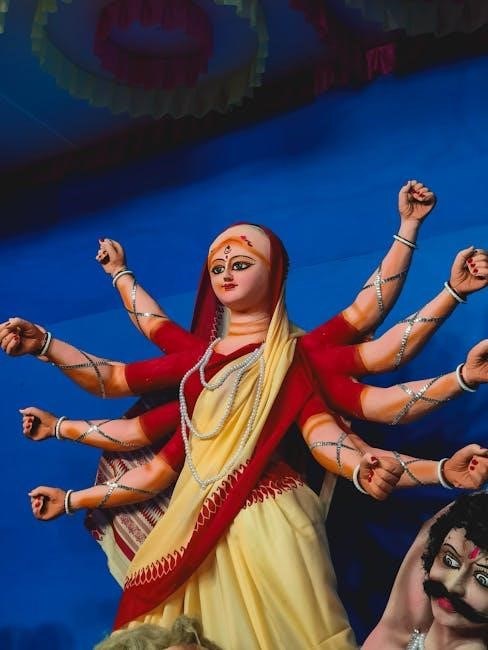
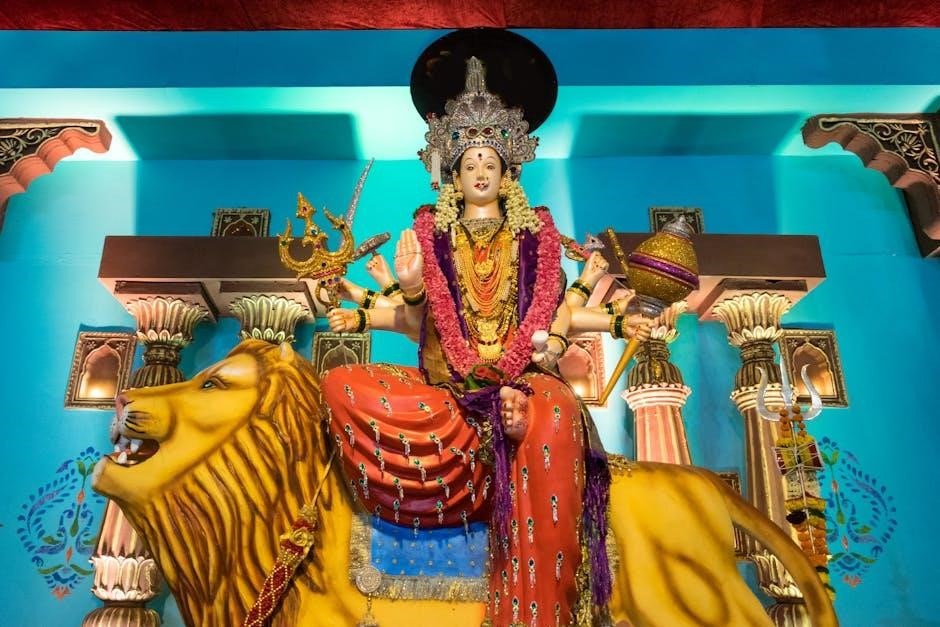
Durga, a powerful and fierce goddess, embodies strength, protection, and the triumph of good over evil. Often depicted riding a lion or tiger, she is a symbol of divine feminine power and courage. She wields multiple weapons, each gifted by different deities, representing her ability to overcome all obstacles.
Durga is invoked to vanquish negativity, demons, and injustice. Her stories, particularly those surrounding the slaying of Mahishasura, exemplify her unwavering commitment to dharma (righteousness). She is a protector of the universe and a source of hope for her devotees.
Chanting her names from the Sahasranamavali is believed to bestow courage, strength, and protection. Durga’s festivals, like Navaratri, celebrate her victory and the divine feminine principle, inspiring devotees worldwide.
Kali: The Fierce Goddess
Kali, often portrayed as a fearsome deity, represents time, change, and the destructive forces of nature. Her dark complexion, adorned with a garland of skulls and a skirt of severed arms, symbolizes her power over death and liberation. Despite her terrifying appearance, Kali is a compassionate mother figure, fiercely protective of her devotees.
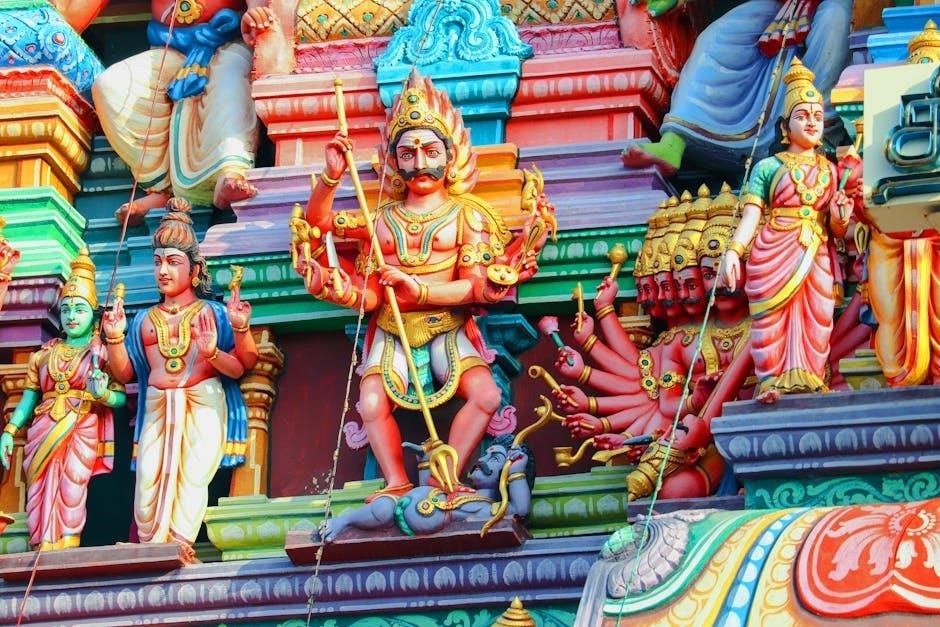
She embodies the ultimate truth – that destruction is a necessary precursor to creation. Kali destroys ignorance and illusion, paving the way for spiritual awakening; Reciting her names from the Sahasranamavali is believed to grant liberation from fear and negativity.
Her worship is deeply rooted in tantric traditions, and she is revered as a powerful force for transformation and renewal. Kali’s devotees seek her blessings for courage, strength, and freedom from the cycle of birth and death.
Popular Deities and Their Significance
Hinduism reveres numerous popular deities – Ganesha, Hanuman, Krishna, and Rama – each embodying unique virtues and playing vital roles in mythology.
Ganesha: The Remover of Obstacles
Ganesha, easily recognizable by his elephant head, is arguably one of the most beloved and widely worshipped deities in the Hindu pantheon. He embodies auspiciousness, wisdom, and prosperity, and is invoked at the beginning of any new venture or undertaking.
Considered the Vighnaharta – the remover of obstacles – devotees pray to Ganesha to clear pathways and ensure success. His large head symbolizes wisdom and understanding, while his large ears signify attentive listening. The single tusk represents the power of discernment, and his modak (sweet) symbolizes the rewards of spiritual practice.
Stories surrounding Ganesha’s birth and adventures are numerous and captivating, highlighting his playful nature and divine power. He is often depicted with a mouse as his vahana (vehicle), symbolizing humility and overcoming limitations. Worship of Ganesha is prevalent throughout India and beyond, demonstrating his universal appeal and significance.
Hanuman: The Devotee and Warrior
Hanuman, the monkey god, is a central figure in the epic Ramayana, revered for his unwavering devotion to Lord Rama. He embodies strength, courage, selfless service, and unwavering loyalty, making him a powerful and inspiring deity.
Hanuman’s extraordinary feats, such as leaping across the ocean to Lanka and battling demons, demonstrate his immense physical and spiritual prowess. He is often depicted carrying the Dronagiri mountain, containing the life-saving herb, to heal Lakshmana, showcasing his dedication and resourcefulness.
Beyond his warrior skills, Hanuman is celebrated as the epitome of bhakti (devotion). His unwavering faith and surrender to Rama serve as a model for devotees seeking spiritual liberation. Chanting the Hanuman Chalisa, a devotional hymn, is a common practice to invoke his blessings and protection.
Krishna: The Divine Lover and Guide
Krishna, a central figure in Hinduism, is revered as the eighth avatar of Vishnu. He embodies divine love, joy, and wisdom, captivating hearts through his playful nature and profound teachings. His life, detailed in scriptures like the Bhagavad Gita, offers guidance on dharma, devotion, and liberation.
Krishna’s romantic escapades with the gopis, particularly Radha, symbolize the soul’s yearning for union with the divine. These stories aren’t merely tales of love, but allegories for the intense longing and ecstatic bliss experienced in spiritual connection.
As a charioteer to Arjuna in the Mahabharata, Krishna imparts invaluable lessons on duty, selflessness, and the nature of reality. He is a guide, a friend, and a divine lover, offering solace and enlightenment to all who seek him.
Rama: The Ideal King and Avatar
Rama, the seventh avatar of Vishnu, is celebrated as the epitome of righteousness, courage, and devotion. His life, chronicled in the Ramayana, serves as a moral compass for Hindus, embodying ideal qualities of a king, husband, son, and brother. He represents dharma – righteous conduct – in its purest form.
Rama’s unwavering commitment to truth and justice, even in the face of adversity, inspires generations. His exile, the abduction of Sita, and the subsequent war with Ravana are not merely epic events, but symbolic representations of the eternal struggle between good and evil.
He is often depicted as the perfect ruler, prioritizing the welfare of his people above all else. Rama’s story emphasizes the importance of duty, loyalty, and unwavering faith, making him a beloved and revered figure throughout the Hindu world.
Sacred Texts and Namavalis
Namavalis, like Sahasranamavali and Ashtottara Shatanamavali, contain auspicious names of deities, recited for blessings and reverence.
Sahasranamavali: 1000 Names of Deities
Sahasranamavali, meaning “thousand names,” represents a significant collection of the names of Hindu deities, most notably Vishnu, but also encompassing Shiva, Devi, and others. These are not merely labels, but rather encapsulate the multifaceted nature and divine qualities of each god or goddess.
Recitation of the Sahasranamavali is considered highly meritorious, believed to bestow blessings, purification, and spiritual advancement upon the devotee. Each name reveals a different aspect of the deity’s power, compassion, and cosmic role.
The practice is deeply rooted in bhakti (devotion) and is often performed as a form of worship, meditation, or mantra practice. Finding a complete list, often in PDF format, allows for dedicated study and consistent recitation, fostering a deeper connection with the divine.
Ashtottara Shatanamavali: 108 Names
The Ashtottara Shatanamavali, meaning “108 names,” is a revered practice in Hinduism, offering a concise yet powerful compilation of a deity’s attributes. This list, frequently found as a downloadable PDF, provides a focused method for devotional practice and seeking blessings.
The number 108 itself holds sacred significance, representing wholeness and the universe. Reciting these 108 names is believed to invoke the deity’s presence and grace, fostering a deeper spiritual connection.
Unlike the expansive Sahasranamavali, the Ashtottara Shatanamavali offers a more manageable practice, suitable for daily worship or specific rituals. It’s a potent tool for bhakti, shraddha, and receiving ashirwad (blessings).
The Significance of Namavali Recitation
Reciting Namavalis – collections of auspicious names of deities – is a cornerstone of Hindu devotional practice. Whether utilizing a 32-name, 108-name (Ashtottara Shatanamavali), or 1000-name (Sahasranamavali) list, often accessed as a PDF, the act is profoundly significant.
This practice, rooted in bhakti, isn’t merely rote repetition; it’s a meditative engagement with the divine qualities embodied by each name. It’s believed to purify the mind, cultivate devotion, and attract positive energy.
The rhythmic chanting, or japa, creates a vibrational resonance, connecting the devotee with the deity’s essence. Resources like TemplePurohit emphasize the power of Sanskrit names, fostering shraddha (faith) and inviting divine ashirwad (blessings).
Understanding Avatars and Incarnations
Avatars, divine incarnations, particularly of Vishnu, descend to Earth to restore dharma and guide humanity, as detailed in sacred texts.
The Concept of Avatar
The concept of Avatar is central to understanding Hindu cosmology and the relationship between the divine and the mortal realm. It signifies the deliberate descent of a deity, primarily Vishnu, to Earth in a tangible form to restore cosmic balance – dharma – and alleviate suffering.
This isn’t a weakening of the divine, but rather a compassionate act of self-manifestation. Avatars appear when righteousness declines and evil prevails, offering guidance, protection, and ultimately, re-establishing order. The purpose isn’t simply intervention, but to provide opportunities for spiritual growth and liberation.
The term itself means “descent,” and these incarnations can take various forms – human, animal, or even a combination thereof. Each avatar possesses unique characteristics and fulfills a specific purpose within the larger narrative of cosmic cycles. Understanding avatars requires recognizing their symbolic significance and the lessons they impart.
Notable Avatars of Vishnu
Vishnu, the Preserver, is renowned for his numerous avatars, each a significant episode in Hindu mythology. Rama, the righteous king featured in the Ramayana, embodies ideal virtue and devotion, battling evil to restore dharma. Krishna, the divine lover and guide from the Mahabharata, imparts profound philosophical teachings, notably the Bhagavad Gita.
Narasimha, the half-man, half-lion avatar, vanquished the demon Hiranyakashipu, demonstrating divine power over tyranny. Varaha, the boar incarnation, rescued Earth from the depths of the cosmic ocean, symbolizing preservation. Matsya, the fish avatar, warned Manu of an impending flood, ensuring the continuation of life.
These avatars, and others like Kalki (yet to appear), illustrate Vishnu’s commitment to protecting the universe and guiding humanity. Each story serves as a moral lesson, reinforcing the importance of righteousness, devotion, and the ultimate triumph of good over evil.